

Rebecca Stern’s Production Notes
Notes from friends

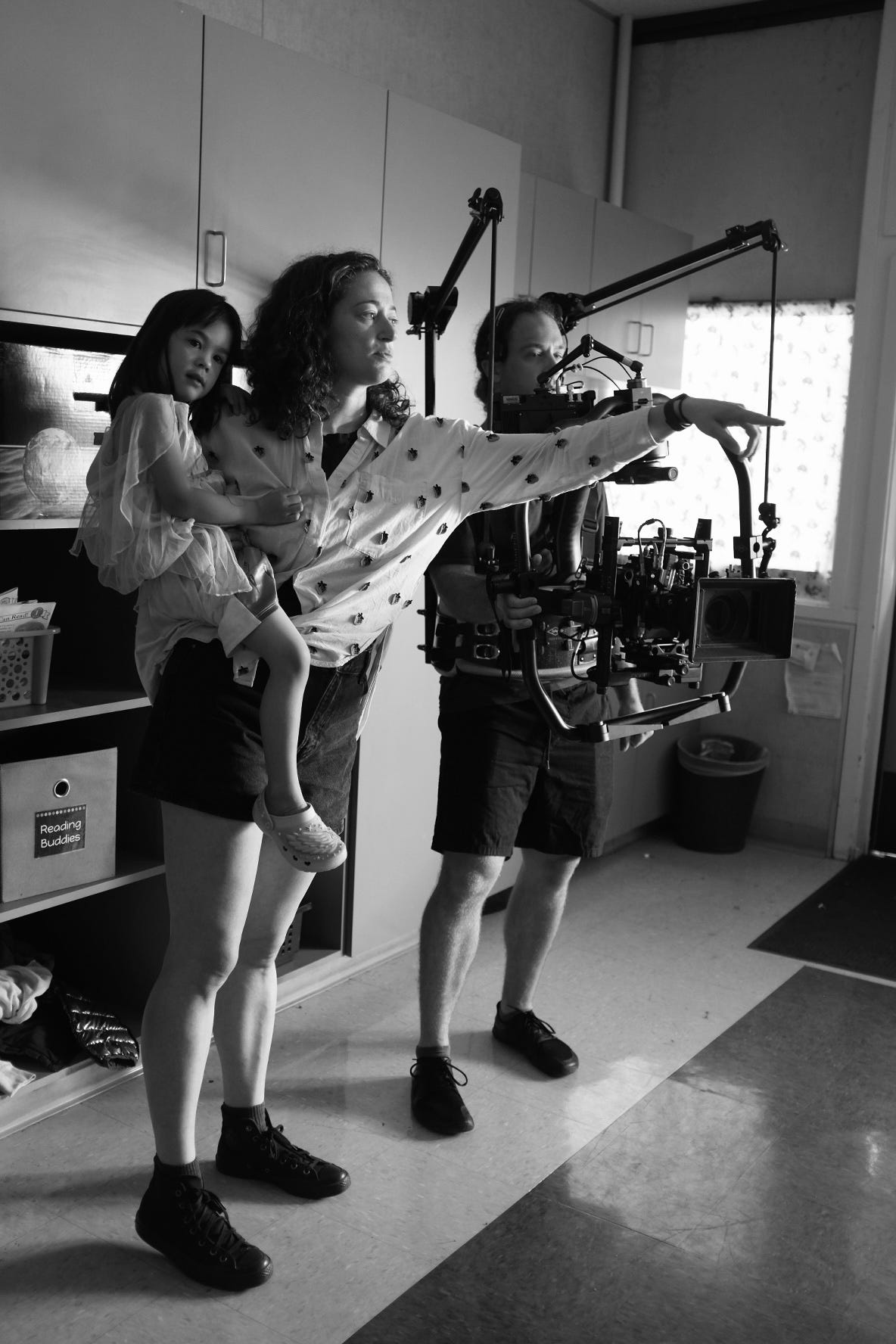
Not every stage of the pre-production process is going to be interesting. I’ve wondered whether it would be worthwhile to write about those mundane moments, and I feel I’ve covered them to some extent. Initially, I wanted these posts to feel like succinct notes, but they’ve evolved into more of a diary format.
The Filmstack community has been incredible. I never set out to build a Substack, the intention was to honestly document the steps, both practical and emotional, that go into making a feature. Recently I found myself becoming more preoccupied with what to write about, and sometimes, what others are writing about vs. being fully immersed in my project. That’s when I knew it was time to step back.
My producer and I are still searching for the right location, and as we go through this process, I thought it might be interesting to talk with friends and colleagues once a month about their top 10–15 takes on production notes. This can include anything from the practical to the bizarre—things they’ve learned along the way in their respective production worlds.
To kick things off is my friend and former colleague, Rebecca Stern, an Emmy-nominated documentary director and producer who has directed and produced films such as Well Groomed, Battleground, Snowy, Cartel Land, and Level Playing Field.
Her films have premiered at Tribeca Film Festival, Sundance, and Hot Docs, and her work has been featured on HBO, Netflix, and ESPN. She also recently directed two episodes of AMC’s Smugshot. One of them features a true crime musical called “Bad Habit”, which is one of the most inventive things I’ve seen all year. You can download it here.
Rebecca’s Notes
When making a documentary, you can’t know or plan everything before you start producing the project, so get comfortable with the unknown.
If something is on my to-do list, it stays there until it’s done. Unless an executive tells me to stop working on it, I’ll keep going. You have to be dogged about your work.
Sometimes documentarians can get lost in the theory and the bigger picture. Instead, ask yourself, “What are we doing tomorrow? How are we getting there?” and focus on the logistics of making something good.
If you want to be a great director, you need to have a strong understanding of how to do most of the jobs on set.
I notice my work suffers when I’m not reading. Following a narrative in my head over many days improves my projects and even my emails. Practicing long-term story building trains my brain to understand structure, people, time, and place in a way scrolling on social media or short form articles never does.
Pitching is its own art form. Learn it well. Decks and proofs of concept don’t always speak for themselves.
You have to decide what your “why” is when making a documentary, because in most cases it will take at least five years to complete. Get clear on what that is.
Honesty is always the best policy, both with your crew and your interview subjects.
There has been a historical trend in which producers are often seen as bad or “out to get everybody.” I’ve especially noticed this with some new directors. Always assume the best intentions. Most people want to work with you on your concept to make the best possible work. Sometimes there’s this idea that being creative means you are morally higher than other people, but that’s not true. Being a producer is also a very creative act.
When you’re making a documentary, you encourage your participants to think deeply about themselves. That means they don’t have to think about you. Enjoy it. This is a time where you can completely forget the spotlight effect for yourself.
After spending several years with a subject, it’s tempting to think you know everything about that other person. The reality is you don’t. You’ve only discovered one facet of who the person is. This is important to remember when you’re in the field crafting your questions—what you ask, the tone you use—because you should know which aspect of their story you are looking to tell, since it is not the whole story.
Can't disagree with any of this.
"When making a documentary, you can’t know or plan everything before you start producing the project, so get comfortable with the unknown."
I'm currently deep diving into the (fictional) films of Robert Altman, a director whose artistic vision was all about being comfortable with the unknown, with seeing what emerges from the process.